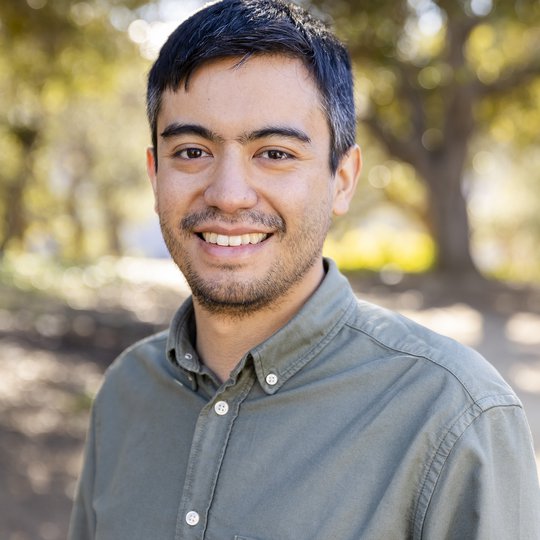
Rodrigo Chi Durán
Seismic-Acoustic Officer · CTBTO · Vienna, Austria
Hello, I’m Rodrigo Chi Durán (徐慶賢/徐庆贤). I am a Seismic-Acoustic Officer at the Comprehensive Nuclear-Test-Ban Treaty Organization (CTBTO) in Vienna, Austria. I hold a Ph.D. in Earth and Planetary Science from UC Berkeley and trained in Electrical Engineering at the Universidad de Chile. My research focuses on seismic sources, forensic seismology and outer core dynamics. I’m always happy to discuss research and potential collaborations.
Background
Education
- 2023Ph.D. in Earth and Planetary ScienceDept. of Earth and Planetary Science, UC Berkeley
- 2015BSc. in Electrical EngineeringFacultad de Ciencias Físicas y Matemáticas, Universidad de Chile
Interests
Research
Seismic sources and forensic seismology
My research focuses on the seismic sources of earthquakes, explosions, and collapses. At the CTBTO, I work on the seismic monitoring behind the verification of the Comprehensive Nuclear-Test-Ban Treaty, improving event characterization methods and supporting the data analysis process.

Vertical component at IC.MDJ (Mudanjiang, China), about 370 km from the 3 September 2017 DPRK test. Bandpass 0.8–6 Hz, amplitude compressed for display. P picked automatically with STA/LTA at +50.1 s. Data: EarthScope / IRIS.
Publications
6 papers · 2 in review
-
Joint Inversion of Regional Waveform, First-Motion Polarity, and Synthetic Aperture Radar Surface Displacement for the Fourth and Sixth North Korean Declared Nuclear Explosions
Extends our joint seismic and InSAR inversion to the 2016 and 2017 declared North Korean nuclear tests. A layered velocity model with topography improves the location, depth, and seismic moment used to estimate yield.
-
Extracting Spatial–Temporal Coherent Patterns in Geomagnetic Secular Variation Using Dynamic Mode Decomposition
Dynamic mode decomposition of the CHAOS-7 field model at high latitudes finds two waves, with periods of about 19 and 58 years. The 60-year wave matches predictions for zonal waves in a stratified layer at the top of the core.
-
Signatures of High-Latitude Waves in Observations of Geomagnetic Acceleration
Westward-moving patches of geomagnetic acceleration at high latitudes are best explained by zonal MAC waves. That explanation requires a stratified layer more than 100 km thick at the top of the core.
-
Joint Regional Waveform, First-Motion Polarity, and Surface Displacement Moment Tensor Inversion of the 3 September 2017 North Korean Nuclear Test
A moment tensor inversion that combines regional waveforms, first-motion polarities, and SAR surface displacement for the 2017 North Korean test. It fits all three data sets and narrows the range of possible source types.
-
Decomposition of Geomagnetic Secular Acceleration Into Traveling Waves Using Complex Empirical Orthogonal Functions
Complex empirical orthogonal functions split the secular acceleration in CHAOS-6 into traveling waves with periods of 7 to 20 years. The waves help constrain the stratification at the top of the core.
-
Automatic detection of P- and S-wave arrival times: new strategies based on the modified fractal method and basic matching pursuit
Two automatic methods for picking P- and S-wave arrival times, one based on a modified fractal method and one on basic matching pursuit.
-
Joint Moment-Tensor and Cross-Correlation Analysis of the 31 July 2025 El Teniente Mine Seismic Event, Chile
Characterizes the 31 July 2025 seismic event at the El Teniente mine in Chile by combining a moment tensor inversion with waveform cross-correlation.
-
Time residuals of T-phases from subduction zone earthquakes in the Pacific Ocean
Studies the travel-time residuals of hydroacoustic T-phases generated by subduction zone earthquakes around the Pacific Ocean.
Teaching
Lecturer
- Spring 2020, 2021, 2022Earth Data Science in PythonInterdisciplinary module · FCFM, Universidad de Chile
- Spring 2017, Fall 2018Project I: Project DevelopmentFCFM, Universidad de Chile
- Fall 2016, 2017, 2018Project Workshop: Arduino ProjectsFCFM, Universidad de Chile
Teaching assistant
- Spring 2023GeodynamicsDept. of Earth and Planetary Science, UC Berkeley
- 2011–2016ElectromagnetismDept. of Physics, FCFM, Universidad de ChileThe problem book grew out of this course →
Projects
Teaching material and family history.
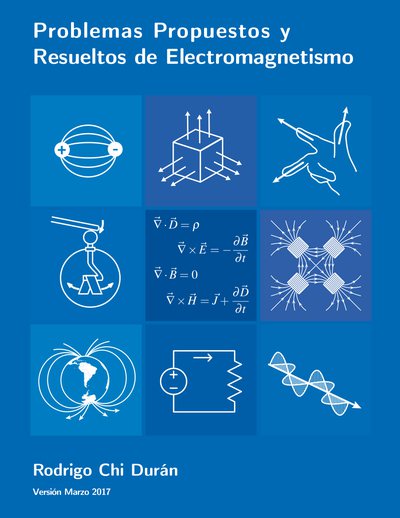 Course notes · 2017